Super Precision Bearings : Enabling Accuracy, Speed & Reliability
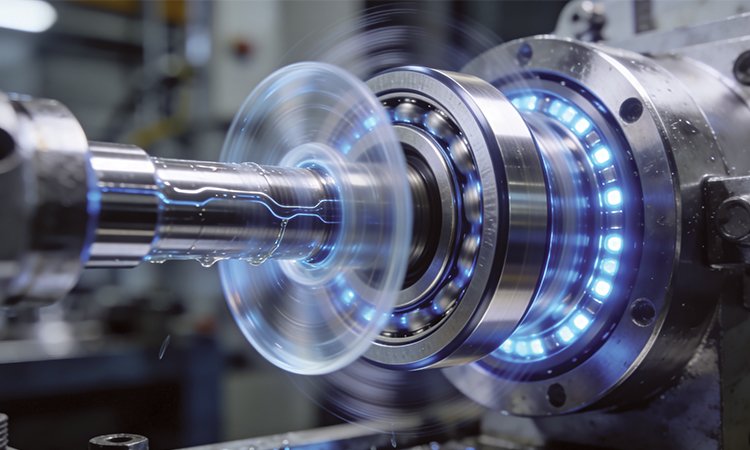
Super precision bearings are highly engineered bearings designed to deliver exceptional accuracy, extremely low friction, high rotational speed, and superior rigidity in demanding industrial applications. Unlike conventional bearings, these bearings are manufactured to extremely tight tolerances and are capable of maintaining precise shaft positioning even under high-speed and high-load conditions. Their ability to minimize vibration, noise, and heat generation makes them indispensable in industries where micron-level precision is critical.
Types & Applications
These bearings are commonly used in machine tool spindles, aerospace systems, robotics, medical equipment, semiconductor manufacturing, precision grinding machines, high-speed motors, and measuring instruments. In modern manufacturing environments where productivity and precision are closely linked, super precision bearings play a crucial role in achieving consistent performance and dimensional accuracy. The most widely used types of super precision bearings include angular contact ball bearings, cylindrical roller bearings, thrust bearings, and hybrid ceramic bearings. Among these, angular contact ball bearings are especially popular in machine tool spindles due to their capability to support both radial and axial loads while operating at extremely high speeds. Cylindrical roller bearings provide excellent rigidity and load-carrying capacity, making them suitable for heavy-duty precision applications.
Defining Characteristics
One of the defining characteristics of super precision bearings is their manufacturing accuracy. Components such as rings, rolling elements, and cages are produced with ultra-fine surface finishes and micron-level dimensional tolerances. Advanced grinding, honing, and super-finishing processes ensure smooth operation and reduced friction. The raceways are designed to provide optimum load distribution, enhancing both performance and bearing life. Material selection also plays a major role in the performance of these bearings. High-grade bearing steel with excellent hardness and fatigue resistance is commonly used. In high-speed or electrically sensitive applications, hybrid bearings featuring ceramic balls and steel rings are increasingly preferred. Ceramic rolling elements are lighter, generate less heat, and offer better resistance to wear and electrical erosion.
Lubrication is another critical aspect in super precision bearing performance. Proper lubrication minimizes friction, dissipates heat, and protects against contamination. Depending on the application, grease lubrication, oil-air lubrication, or oil mist systems may be employed. In high-speed spindles, advanced lubrication systems ensure consistent performance while reducing energy consumption.
Advantages
The advantages offered by super precision bearings are significant. They enhance machining accuracy, improve surface finish quality, enable higher spindle speeds, reduce vibration, and extend machine life. Their superior rigidity contributes to stable machining operations, especially in high-speed milling, grinding, and turning applications. Additionally, lower heat generation helps maintain dimensional stability during prolonged operations. However, achieving optimum performance from super precision bearings requires proper installation, alignment, preload setting, and maintenance. Even minor contamination or incorrect mounting can affect accuracy and service life. Hence, manufacturers emphasize clean-room assembly practices and precision handling techniques. With the rapid advancement of smart manufacturing and high-speed automation, the demand for super precision bearings continues to grow. Industries are increasingly seeking bearings capable of supporting higher speeds, greater efficiency, and predictive maintenance capabilities. Innovations such as sensor-integrated bearings, advanced cage designs, and improved ceramic materials are further enhancing their performance.
In essence, super precision bearings are the backbone of modern precision engineering. Their contribution to accuracy, reliability, and productivity makes them a vital component in advanced industrial machinery and high-performance equipment worldwide.