From Machines to Mobility Delivering Excellence in Every Revolution

Chairman
NRB Industrial Bearing Ltd
As India’s manufacturing sector moves decisively towards higher precision, greater automation and global competitiveness, the demand for advanced bearing technologies has never been stronger. NRB Industrial Bearings Limited (NIBL) is responding to this transformation by expanding its capabilities-from industrial and super precision bearings to precision motion solutions and now automotive bearings. In this exclusive conversation, the company’s leadership shares the NIBL Group’s vision, the evolution of indigenous precision engineering, the opportunities emerging from global supply chain realignment, and how NIBL is positioning itself as a trusted technology partner for the future of manufacturing. Excerpts:
Devesh Singh Sahney
Chairman, NRB Industrial Bearings Ltd.
Q. Before we get into specifics, could you help our readers understand the NIBL Group structure – how NIBL, NIBC and NIB-Korta fit together?
It is useful to clarify this at the outset because the three businesses are complementary, but each has a distinct role.
NRB Industrial Bearings Limited – NIBL – is the listed parent and the foundation of the NIBL Group. NIBL manufactures a broad range of industrial bearings, including deep groove ball bearings, cylindrical and spherical roller bearings, cam followers, wide inner ring bearings and housed units. These products serve a diverse range of industries, including textiles, material handling, renewable energy, oil and gas, industrial machinery and factory automation.
NRB-IBC Bearings Private Limited – NIBC – is our specialised super precision bearings business and a joint venture with IBC Wälzlager GmbH of Germany. NIBC manufactures precision angular contact ball bearings, precision cylindrical roller bearings, ceramic hybrid bearings and ball screw support bearings, with particular focus on demanding applications such as machine tools and aerospace. NIBL-Korta Engineering Private Limited, based in Bengaluru, completes the precision motion portfolio through ball screws and lead screws. This business became part of the NIBL Group following our acquisition of Korta Engineering India Private Limted in 2018, which was then a subsidiary of Korta Spain So, in simple terms, NIBL provides the industrial bearing platform, NIBC brings super precision bearing technology, and NIBL-Korta adds precision motion through ball screws and lead screws. Together, they give us a comprehensive precision engineering platform capable of supporting customers from conventional industrial applications to some of the most demanding high-precision applications.
Q. For many years, India relied on imported super precision bearings for critical applications. How has the market evolved, and what factors have enabled indigenous manufacturing – through NIBC – to emerge as a credible alternative?
For many years, Indian machine tool manufacturers were heavily dependent on imported super precision bearings, particularly from Germany, Japan and Europe. This inevitably meant longer lead times, higher landed costs and dependence on overseas suppliers for technical support.
Super precision bearings are not easy products to manufacture. We are dealing with extremely tight tolerances, sophisticated metallurgy, advanced metrology and a level of manufacturing discipline where performance is determined in microns. What has changed is the maturity of the entire Indian manufacturing ecosystem.
India’s machine tool industry has become considerably more sophisticated. Indian manufacturers are today building increasingly advanced machines for both domestic and international customers. As their capabilities have evolved, they require suppliers who can provide not simply a lower-cost product, but world-class quality, consistency and engineering support. NIBC has benefited enormously from our partnership joint venture with IBC Wälzlager of Germany, which enabled us to combine decades of German bearing technology and engineering knowledge with Indian manufacturing capability.
At the same time, we have consistently invested in manufacturing technology, metrology, quality systems and R&D within India. The result is important: Indian customers today have access to locally manufactured super precision bearings that can compete with imported products on engineering performance – not merely on price. That, to me, is the real achievement of localisation.
Q. NIBC has established itself as a specialist in super precision bearings. How has customer perception changed over the years, particularly among OEMs that traditionally preferred imported brands?
Trust in engineering is never created through marketing alone. It is earned through performance – one bearing, one application and one customer at a time.
In NIBC’s earlier years, customers understandably approached an Indian-manufactured super precision bearing cautiously. In many cases, we initially entered as a trial supplier or second source, while an established international brand remained the primary approved supplier. That was perfectly understandable. A spindle bearing or ball screw support bearing is a critical component, and an OEM cannot afford to compromise the performance of an entire machine.
What changed customer perception was consistent performance. As customers experienced our quality, reliability and delivery – and equally importantly, saw our engineers working alongside their teams to solve application-specific problems, confidence steadily increased. Today, our relationship with several customers has moved well beyond simply supplying a bearing. We increasingly work with OEMs during the development of new machines and applications. For me, that transition – from being considered an alternative supplier to becoming an engineering and development partner – is perhaps the strongest indication of how customer perception of NIBC has evolved.
Q. NIBC combines German bearing technology with Indian manufacturing. How has this joint ventureevolved, and to what extent is product development and engineering now driven from India?
Our joint venture with IBC Wälzlager GmbH began with a strong foundation of German technology, engineering know-how and manufacturing processes combined with Indian manufacturing capability. That technological relationship remains extremely valuable, particularly in specialised areas involving advanced materials, bearing geometry and products such as ceramic hybrid bearings.
What has evolved considerably, however, is our own engineering capability in India. Our in-house R&D and application engineering teams increasingly work directly with Indian OEMs to understand the requirements of specific spindles, rotary tables, ball screws and machine platforms. Rather than simply manufacturing a product from an international catalogue, our objective is increasingly to develop or adapt solutions around the customer’s actual machine and operating conditions.
So I would describe NIBC today as a genuine India-Germany engineering joint venture: we continue to benefit from German technological depth while progressively strengthening product development, application engineering and customer-facing innovation within India. That balance is extremely important to our long-term strategy.
Q. As machine tools become faster, smarter and more automated, what new performance requirements are customers demanding from bearing manufacturers? How is NIBC preparing for this next phase of precision engineering?
I see three major requirements emerging: speed, reliability and intelligence. First is speed. As spindle speeds increase, customers require bearings with extremely low friction, excellent thermal stability and minimal temperature rise. This is one reason ceramic hybrid bearing technology is increasingly important – particularly in demanding high-speed applications.
Second is reliability. Manufacturing is progressively moving towards higher levels of automation, including unmanned and lights-out production. Under these conditions, customers require longer operating life, greater consistency and reduced maintenance intervention. This is driving development in areas such as sealed and pre-lubricated bearing solutions. Third is intelligence. As Industry 4.0 and predictive maintenance become more widespread, customers increasingly want to understand what is happening inside their machines in real time. Vibration, temperature and other operating parameters can provide valuable early indications of machine health.
Our approach at NIBC is therefore not simply to manufacture the bearing of today. We are investing in R&D, testing, metrology and closer collaboration with OEMs so that we can participate in designing the next generation of high-speed, highly automated and increasingly intelligent machines.
Q. The bearing industry remains highly competitive, with several established global and domestic players. Beyond product quality, what differentiates the NIBL Group in terms of engineering support, customization and customer engagement?
Quality is the entry ticket. It is essential, but by itself it does not create a long-term customer relationship. Our differentiation is built around engineering proximity, responsiveness and co-development. Because our engineering and manufacturing capabilities are located in India, our customers have direct access to our technical teams. If an OEM is developing a new machine or experiencing an application problem, we can engage directly with their engineers, understand the operating conditions and work towards a solution specifically for that application.
We increasingly want to participate at the concept and design stage rather than being approached only after the machine specifications have been frozen. That ability to co-design, develop prototypes quickly, provide local engineering support and maintain accountability from development through production is particularly valuable to Indian OEMs. We may not have the size of some of the world’s largest bearing companies, but our size gives us agility, and our engineering capability gives us relevance. That combination allows us to compete very effectively.
Q. With global manufacturers looking to diversify their supply chains, do you see India emerging as a significant manufacturing and export hub for precision bearings? What opportunities does this present for the NIBL Group?
Absolutely. I believe the direction is already clear; the real question is how quickly India can capitalise on the opportunity. Global manufacturers are actively reassessing supply chains and looking to reduce excessive dependence on any single geography. India has several structural advantages: a strong engineering talent base, competitive manufacturing costs, improving infrastructure, a large domestic market and, increasingly, a demonstrated capability in precision manufacturing.
For the NIBL Group, this creates a significant opportunity. NIBC combines manufacturing in India with the technological credibility of our German partnership. That is a powerful proposition when approaching international customers who want to diversify their sourcing without compromising on engineering standards.
At the same time, India’s growing domestic machine tool, automotive, aerospace and industrial markets provide the scale required to justify continued investment in manufacturing capacity and technology. Our ambition therefore goes beyond import substitution.We want products manufactured in India – whether NIBC’s super precision bearings or NIBL-Korta’s precision ball screws – to compete successfully in global markets on technology, quality and reliability. That is the larger opportunity we see.
Q. Your bearings are used in demanding sectors such as machine tools, aerospace and other high-precision applications. Which industries do you expect to drive the next phase of growth, and why?
Machine tools will continue to be an important foundation for NIBC because India’s manufacturing expansion naturally creates demand for increasingly sophisticated production equipment. However, I am particularly excited about aerospace and defence. India’s drive towards greater indigenous manufacturing in these sectors is creating demand for highly engineered, safety-critical and ultra-precision components. The capabilities required – precision, consistency, traceability and reliability – are closely aligned with the engineering disciplines we have already developed within NIBC.
We also see significant opportunities emerging from electric mobility, precision machining of EV components, medical equipment and devices, robotics and factory automation. All these sectors require increasingly high levels of running accuracy, reliability and precision. At the same time, NIBL’s industrial bearing portfolio will continue to benefit from growth in areas such as material handling, industrial gearboxes, construction equipment, renewable energy and general industrial machinery.
So our growth opportunity is becoming increasingly diversified – both across industries and across levels of precision. This month marks an important milestone with the launch of NIBL’s automotive bearings range. What strategic thinking led to this expansion, and how does it complement your core business?
Automotive is a very deliberate strategic expansion for us. Over the years, NIBL has built strong manufacturing capabilities, quality systems and industrial bearing expertise, while NIBC has helped establish the NIBL Group’s reputation for precision engineering.
The automotive bearing market is significantly larger, and although its volumes and commercial dynamics are different from super precision bearings, it rewards many of the same fundamental capabilities: consistent quality, disciplined manufacturing, reliable supply and strong engineering support. We therefore see automotive not as a departure from our core capabilities, but as a logical extension of them.
NIBC will continue to lead our technology-intensive super precision business, while automotive gives NIBL access to a substantially larger addressable market and creates another important engine of growth for the NIBL Group. We have also established dedicated leadership for the automotive vertical because we recognise that this market requires specialised focus, customer relationships and execution. Our intention is to build this business carefully, professionally and for the long term.
Q. Automotive bearings represent a much larger and more diverse market than super precision bearings. Which segments is NIBL targeting initially, and what differentiators will help you compete in this space?
What I can say is that we have no intention of entering the automotive bearing market simply as another generic, price-led supplier. Our strategy is to bring the same manufacturing discipline, quality culture and engineering mindset that have been developed across NIBL and NIBC into the automotive business. We are entering a market that already has strong domestic and multinational competitors, many of whom have considerable scale. We respect that. Our differentiation therefore has to come from consistency, responsiveness, engineering support and the ability to build long-term partnerships with customers. We would rather build this business sustainably and establish credibility step by step than chase volume without creating a meaningful competitive advantage.
Q. Does the launch of automotive bearings signal the NIBL Group’s evolution from a niche technology specialist into a full-spectrum bearing manufacturer? How do you see the business mix evolving over the next five years?
Yes, although I would describe it as an expansion of our capabilities rather than a change in our identity. Precision engineering remains the common thread across everything we do.
Today, NIBL provides industrial bearings, NIBC provides super precision and ceramic hybrid bearings, NIBL-Korta provides precision ball screws and lead screws, and automotive is emerging as an important new growth platform for NIBL. Over the next five years, I expect automotive to become a meaningful contributor to the NIBL Group’s growth. NIBC should continue to be an important technology and innovation engine, while NIBL-Korta has significant potential as India’s precision machine tool and automation industries expand. At the same time, our established industrial bearing business remains an important foundation. Ultimately, our objective is to create a more diversified and resilient business portfolio, reducing dependence on the cycle of any one industry while maintaining precision engineering and manufacturing excellence as the common DNA across the NIBL Group.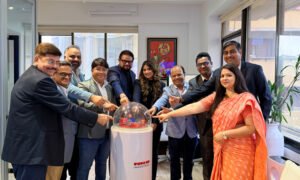
Q. The bearing industry is increasingly embracing digital manufacturing, predictive maintenance and Industry 4.0. How are these trends influencing your manufacturing processes as well as your product development roadmap?
Digitalisation is influencing both how we manufacture and how we think about the future of our products. On the manufacturing side, greater use of process monitoring, digital metrology and data-driven quality control allows us to identify variation earlier and maintain tighter process control. This becomes particularly important in super precision manufacturing, where tolerances are extremely small and consistency is critical. On the product side, the industry is gradually moving towards condition monitoring and predictive maintenance. Customers increasingly want machines that can identify potential problems before they result in unplanned downtime. Bearings are naturally an important part of that ecosystem because changes in vibration, temperature and operating behaviour can provide valuable information about machine health.
We are therefore looking at how our bearing solutions can increasingly complement the customer’s condition-monitoring architecture. I believe the future will involve a gradual transition from simply supplying a mechanical component towards providing engineering solutions that contribute to the reliability, productivity and intelligence of the customer’s machine.
Q. Looking ahead, what is your vision for the NIBL Group over the next decade? What milestones – in technology, market share, exports or product portfolio – would define success?
My vision is ambitious, but very clear. I want NIBC to be recognised as a credible alternative to the world’s leading super precision bearing manufacturers. Not as a lower-cost substitute, but as a trusted technology and engineering partner. For the wider NIBL Group, our ambition is to build one of India’s most comprehensive precision motion engineering platforms – spanning industrial bearings, super precision bearings, ball screws and lead screws, and now automotive bearings.
Over the coming decade, success would mean several things. It would mean establishing automotive as a substantial and sustainable business for NIBL. It would mean significantly expanding our international footprint and increasing the contribution of exports. It would mean continuing to strengthen our engineering and R&D capability in India so that an increasing proportion of product development and innovation originates from our own teams. It would mean expanding NIBL-Korta’s position in precision ball screws and motion technology. And it would mean progressively broadening our presence in technologically demanding sectors such as aerospace, machine tools, automotive, automation and advanced industrial applications. But ultimately, I would measure success by something larger than revenue alone.
If, ten years from now, customers in India and internationally look at the NIBL Group and see an Indian engineering company capable of competing with the best global manufacturers on technology, quality and innovation, then we will have achieved what we set out to do. We will not simply have built a bigger company. We will have built a more capable, more innovative and globally respected Indian engineering company.