
The Art of Raceway Finishing
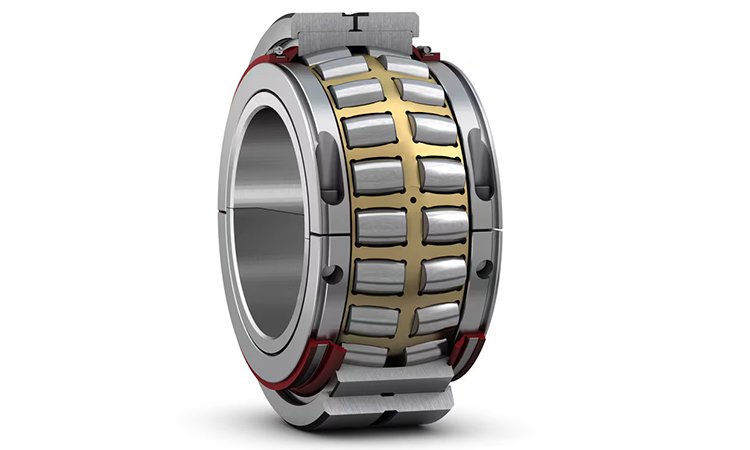
In the intricate world of bearing manufacturing, few processes are as decisive to performance and longevity as raceway finishing. The raceway is the functional heart of a bearing—the precisely contoured path on which balls or rollers travel while carrying load and enabling motion. No matter how advanced the bearing steel, how accurate the machining, or how robust the heat treatment, it is ultimately the quality of the raceway surface that determines how smoothly a bearing runs, how much friction it generates, how quietly it operates, and how long it survives in service. Raceway finishing is therefore not just a manufacturing step; it is an art form where materials science, precision engineering, and process mastery come together to create motion that is almost frictionless.
Why Raceway Finishing is So Critical
The raceway is subjected to repeated rolling contact stresses that can exceed several gigapascals in high-load or high-speed bearings. Under these conditions, even microscopic surface imperfections become sites of stress concentration, lubricant breakdown, and fatigue initiation. A raceway that appears smooth to the naked eye may, under magnification, reveal peaks, valleys, waviness, and directional grinding marks that significantly influence bearing behaviour.
A well-finished raceway supports the formation of a stable elastohydrodynamic lubrication (EHL) film, which separates metal surfaces and minimises wear. A poorly finished one disrupts this film, leading to metal-to-metal contact, higher friction, noise, and early failure. Thus, raceway finishing directly controls key performance attributes such as efficiency, vibration, heat generation, and fatigue life.
From Grinding to Superfinishing: The Journey of a Raceway
Raceway finishing is not a single operation but a carefully sequenced journey. It typically begins with precision grinding, where the basic geometry—diameter, curvature, and roundness—is established. Modern CNC grinding machines use high-quality abrasive wheels and precise kinematics to generate raceways with tight dimensional and form tolerances.
However, grinding alone leaves behind a characteristic surface texture with directional marks and relatively high roughness. This is where fine finishing and superfinishing steps take over. Through processes such as honing, lapping, and superfinishing with abrasive stones or tapes, the surface is gradually refined. Peaks are removed, valleys are smoothed, and the texture is transformed into a plateau-like finish that supports lubricant retention while minimising asperity contact.
In critical bearings, this transition from ground to superfinished surfaces can improve fatigue life by several times, reduce running torque, and dramatically lower noise and vibration.
Surface Texture: More Than Just Roughness
Raceway finishing is often misunderstood as merely reducing surface roughness. In reality, it is about engineering the right surface texture. A raceway that is too rough will cause wear and noise, while one that is too smooth may struggle to retain lubricant, especially under marginal lubrication conditions.
The ideal raceway surface has a controlled micro-topography with shallow valleys that act as lubricant reservoirs and a smooth plateau that carries the load. Achieving this balance requires precise control over abrasive size, contact pressure, dwell time, and process sequencing. This is where the “art” of raceway finishing comes into play—experienced engineers and operators understand how subtle changes in process parameters translate into measurable differences in bearing performance.
Raceway Finishing and Noise Control
In applications such as electric vehicles, machine tool spindles, and household appliances, bearing noise has become a critical quality metric. Much of this noise originates from microscopic irregularities in the raceway surface that excite vibration as rolling elements pass over them.
Superfinished raceways with low waviness and controlled texture significantly reduce these excitations, resulting in quieter and smoother-running bearings. This is particularly important in EV drivetrains, where the absence of engine noise makes bearing-related sounds far more noticeable to the end user.
The Link Between Raceway Finishing and Bearing Life
Fatigue life is one of the most important performance indicators of a bearing. Subsurface fatigue cracks often initiate at or near surface imperfections where stress is concentrated. By removing grinding burns, micro-cracks, and sharp asperities through careful finishing, the stress distribution in the raceway becomes more uniform.
This leads to lower peak stresses, reduced crack initiation, and slower crack propagation. In practical terms, a well-finished raceway can multiply the service life of a bearing, especially in demanding environments such as wind turbines, railways, and heavy machinery.
Process Control and Consistency
Raceway finishing is highly sensitive to process control. Factors such as abrasive wear, machine alignment, temperature, and material hardness can all influence the final surface. Leading bearing manufacturers therefore invest heavily in in-process monitoring and post-process inspection to ensure consistency.
Advanced surface measurement techniques allow manufacturers to quantify not only roughness but also waviness and bearing area curves, providing a complete picture of raceway quality. This data is used to fine-tune finishing processes and ensure that every bearing meets the same high standards, batch after batch.
Raceway Finishing in the Era of High-Performance Bearings
As bearings are pushed to operate at higher speeds, higher loads, and in more extreme environments, the demands on raceway finishing continue to grow. In aerospace, EVs, and high-speed industrial equipment, even small gains in efficiency and reliability translate into major system-level benefits.
Modern finishing technologies, including automated superfinishing systems and precision-controlled abrasive processes, are enabling manufacturers to achieve surface qualities that were unimaginable just a decade ago. These advances are helping bearings deliver lower friction, longer life, and higher energy efficiency—key enablers of modern engineering systems.
Conclusion: Where Science Meets Craftsmanship
Raceway finishing sits at the intersection of science and craftsmanship. It requires a deep understanding of materials, lubrication, contact mechanics, and surface engineering, combined with the practical know-how to translate theory into consistent, high-quality production. In critical bearing manufacturing, it is this mastery of raceway finishing that separates ordinary components from world-class precision products. When a bearing runs smoothly, quietly, and reliably for years, it is often the invisible perfection of its raceways that makes all the difference.

