Designing Bearings for the Semiconductor Industry
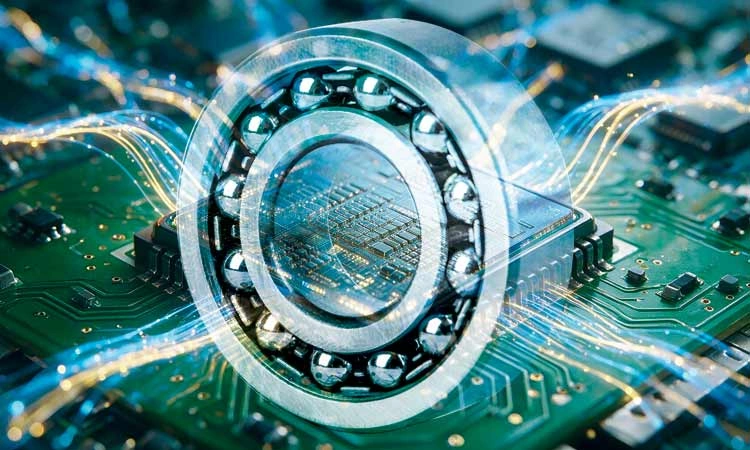
Engineering Ultra-Precision Bearings for the World’s Most Demanding Manufacturing Environment
Semiconductors are the building blocks of the digital age. From smartphones and laptops to electric vehicles, medical equipment, industrial automation and artificial intelligence, virtually every modern technology depends on semiconductor chips. As chipmakers strive to produce smaller, faster and more powerful integrated circuits, semiconductor manufacturing equipment is becoming increasingly sophisticated. At the heart of this equipment are precision motion systems that rely on one seemingly simple but indispensable component-the bearing. Unlike bearings used in conventional industrial machinery, semiconductor bearings operate in environments where microscopic contaminants, vibration, thermal instability and even minute positioning errors are unacceptable.
Designing bearings for this industry therefore demands an extraordinary level of engineering precision, advanced materials and specialised manufacturing processes. With countries around the world investing heavily in semiconductor manufacturing, and India making significant strides towards establishing a domestic semiconductor ecosystem, the demand for ultra-precision bearing solutions is expected to grow substantially.
The Unique Demands of Semiconductor Manufacturing
Semiconductor fabrication differs fundamentally from traditional manufacturing.
Integrated circuits are produced inside cleanrooms where airborne particles are measured in fractions of a micron. A single contaminant can damage a silicon wafer containing hundreds of chips, resulting in substantial production losses.
Manufacturing equipment must therefore deliver:
- Ultra-high positioning accuracy
- Extremely low vibration
- Minimal particle generation
- High rotational precision
- Exceptional reliability
- Long maintenance intervals
- Compatibility with vacuum and cleanroom environments
Bearings used in wafer handling robots, lithography systems, wafer inspection equipment, chemical processing tools and vacuum pumps must consistently meet these demanding requirements.
Precision Is Everything
Modern semiconductor manufacturing routinely works at nanometre-scale tolerances. Wafer stages must position silicon wafers with extraordinary repeatability during lithography, etching and inspection processes.
Even microscopic bearing runout or vibration can affect alignment accuracy and reduce manufacturing yield.
Consequently, semiconductor bearings are manufactured with exceptionally tight tolerances, precision-ground raceways and highly controlled internal clearances to ensure smooth and repeatable motion.
Every micron matters.
Low Particle Generation Is Essential
Conventional bearings generate microscopic wear particles during operation. While acceptable in most industrial environments, such contamination is unacceptable inside semiconductor fabrication facilities.
Designers therefore focus on minimising particle generation through:
- Advanced surface finishing
- Optimised lubrication
- High-quality cage materials
- Precision manufacturing
- Improved sealing systems
Some applications employ contact-free or specialised bearing arrangements that further reduce contamination risks.
Advanced Materials for High Performance
Material selection plays a crucial role in semiconductor bearing design.
Hybrid bearings featuring steel rings and silicon nitride ceramic balls have become increasingly popular because ceramic rolling elements offer:
- Higher stiffness
- Lower weight
- Reduced friction
- Excellent wear resistance
- Electrical insulation
- Superior thermal stability
In highly corrosive process environments, stainless steel and specialised corrosion-resistant alloys are also widely used.
For extremely demanding applications, all-ceramic bearings may be selected owing to their exceptional resistance to chemicals, corrosion and high temperatures.
Bearings for Vacuum Environments
Many semiconductor manufacturing processes take place under high or ultra-high vacuum conditions.
Traditional lubricants tend to outgas under vacuum, contaminating sensitive processing chambers.
Designers therefore employ:
- Vacuum-compatible lubricants
- Solid lubrication technologies
- Special low-outgassing greases
- Advanced surface coatings
These specialised solutions ensure reliable bearing operation without compromising process cleanliness.
Thermal Stability Is Critical
Semiconductor manufacturing equipment often operates continuously for extended periods.
Even small temperature variations can cause thermal expansion that affects positioning accuracy.
Bearing designers minimise these effects through:
- Low-friction internal geometry
- Optimised preload
- Precision manufacturing
- Advanced ceramic materials
- Carefully selected lubricants
Stable operating temperatures contribute directly to process accuracy and product quality.
High-Speed Applications
Several semiconductor production systems incorporate high-speed rotating equipment, including:
- Wafer polishing machines
- Vacuum pumps
- Cooling systems
- High-speed spindles
- Precision grinding equipment
These applications demand bearings capable of operating at very high rotational speeds while maintaining low noise, minimal heat generation and exceptional reliability.
Hybrid ceramic bearings are particularly well suited to such operating conditions.
Cleanroom Compatibility
Every component introduced into a semiconductor fabrication facility must comply with stringent cleanroom standards.
Bearing manufacturers therefore pay close attention to:
- Material cleanliness
- Surface finish
- Corrosion resistance
- Lubricant compatibility
- Packaging procedures
- Assembly environments
Many precision bearings are assembled and packaged in controlled cleanroom conditions before shipment to prevent contamination.
The Role of Lubrication
Lubrication remains one of the most critical aspects of bearing performance.
However, semiconductor applications require lubricants that combine:
- Low outgassing
- Long service life
- Minimal particle generation
- Chemical stability
- Low evaporation rates
Perfluoropolyether (PFPE)-based lubricants and other specialty greases are frequently used because they maintain stable performance under demanding cleanroom and vacuum conditions.
Smart Bearings for Predictive Maintenance
Digitalisation is transforming semiconductor manufacturing.
Modern fabrication plants increasingly rely on predictive maintenance to maximise equipment availability.
Sensor-integrated smart bearings can monitor:
- Temperature
- Vibration
- Rotational speed
- Lubrication condition
- Load
Real-time monitoring enables maintenance teams to detect developing faults before they affect production, reducing downtime and improving equipment reliability.
Artificial intelligence is further enhancing diagnostic accuracy by identifying subtle changes in bearing behaviour long before failure occurs.
Precision Manufacturing Makes the Difference
Producing semiconductor bearings requires manufacturing processes capable of achieving extraordinary dimensional accuracy.
Leading manufacturers employ:
- Ultra-precision CNC grinding
- Super-finishing
- Laser-based metrology
- Automated inspection systems
- AI-assisted quality control
- Robotic assembly
Every bearing undergoes rigorous inspection to ensure compliance with demanding dimensional and performance specifications.
Consistency is just as important as accuracy.
India’s Emerging Opportunity
India’s ambition to become a significant player in semiconductor manufacturing presents exciting opportunities for the precision bearing industry.
Government initiatives supporting semiconductor fabrication, electronics manufacturing and advanced engineering are expected to stimulate demand for high-performance bearings used in wafer fabrication equipment, robotics, cleanroom automation and semiconductor testing systems.
As Indian manufacturers invest in precision machining, advanced materials and metrology, they can position themselves as suppliers to both domestic semiconductor projects and global equipment manufacturers.
Collaboration between bearing manufacturers, machine builders, research institutions and semiconductor equipment OEMs will be essential for building this specialised capability.
Future Trends
The next generation of semiconductor bearings will focus on even greater precision, cleanliness and intelligence.
Emerging developments include:
- Nano-engineered surface coatings
- Advanced ceramic materials
- Magnetic and air-bearing technologies for specialised applications
- AI-enabled condition monitoring
- Digital twins for bearing performance simulation
- Environmentally sustainable lubricants
- Additive manufacturing of complex bearing components
As semiconductor devices continue to shrink while production speeds increase, bearing technology must evolve in parallel to support ever tighter manufacturing tolerances.
Conclusion
Designing bearings for the semiconductor industry is among the most demanding challenges in precision engineering. These bearings must operate flawlessly in cleanrooms, vacuum environments and ultra-precision motion systems where even microscopic errors can compromise production.
Through advances in materials, lubrication, precision manufacturing and smart sensing technologies, modern bearing manufacturers are enabling semiconductor equipment to achieve unprecedented levels of accuracy, reliability and productivity.
For India’s growing precision engineering sector, the expanding semiconductor ecosystem represents a significant opportunity. Companies capable of mastering ultra-precision bearing design, clean manufacturing practices and advanced materials will be well placed to participate in one of the world’s fastest-growing and most technologically advanced industries.
In semiconductor manufacturing, where perfection is measured in nanometres, precision bearings are far more than mechanical components-they are silent enablers of the digital revolution.