Bearings for Turbine Gearboxes : The Unsung Heroes of Reliable Power Transmission
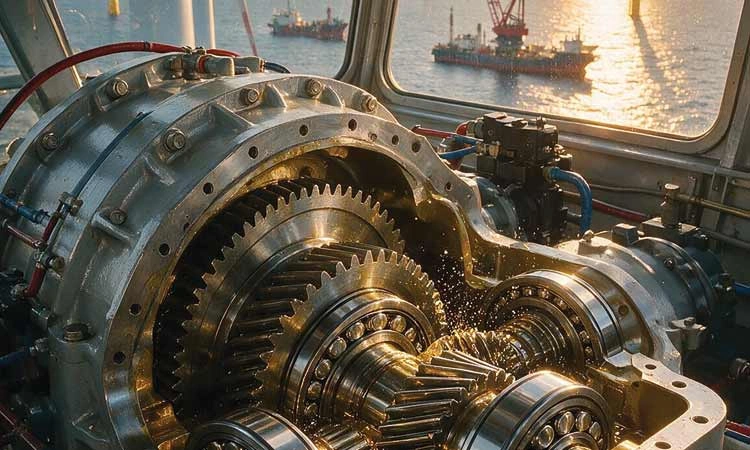
Whether in wind farms, thermal power plants, marine propulsion systems or industrial gas turbines, turbine gearboxes play a pivotal role in transmitting power efficiently. At the heart of these gearboxes lies a set of highly engineered bearings that ensure smooth rotation, accurate shaft alignment and dependable operation under some of the harshest operating environments
The Role of Bearings in Turbine Gearboxes
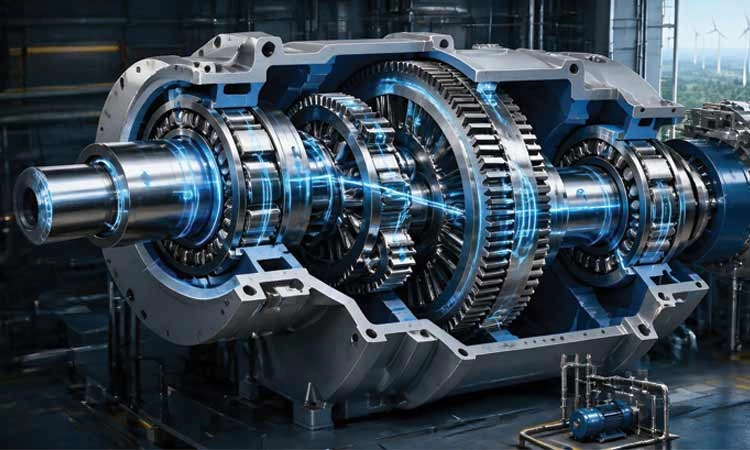
A turbine gearbox converts the relatively low-speed, high-torque output of a turbine into the higher rotational speeds required by generators or driven equipment. Bearings support the shafts carrying gears and maintain precise positioning throughout the power transmission process.
Their primary functions include:
Supporting radial and axial loads
Maintaining shaft alignment
Reducing friction and energy losses
Absorbing dynamic and shock loads
Ensuring smooth gear meshing
Minimising vibration and noise
Extending gearbox service life
Failure of even a single bearing can lead to catastrophic gearbox damage, prolonged downtime and costly repairs.
Why Turbine Gearbox Bearings are Different
Bearings used in turbine gearboxes operate under conditions far more demanding than those found in standard industrial machinery. They must cope with:
Heavy combined radial and thrust loads
Variable wind or process loads
High-speed operation
Frequent load reversals
Temperature fluctuations
Continuous operation for years
Lubrication challenges
Contamination from wear particles
In wind turbines, for example, unpredictable wind conditions generate constantly changing loads. Bearings must accommodate these dynamic forces while maintaining accurate shaft positioning.
In gas turbines, bearings encounter extremely high rotational speeds and elevated temperatures requiring exceptional dimensional stability.
Types of Bearings Used
Different bearing designs are selected depending on gearbox location and loading conditions.
Cylindrical Roller Bearings
These bearings are widely used for supporting high radial loads at high speeds. Their line contact between rollers and raceways enables them to carry significantly higher loads than ball bearings.
Advantages include:
- High radial load capacity
- Excellent rigidity
- Low friction
- High-speed capability
- Long fatigue life
They are commonly installed on intermediate and high-speed shafts.
Tapered Roller Bearings
Tapered roller bearings simultaneously carry radial and axial loads, making them ideal for gearbox shafts subjected to combined loading.
Key features include:
- High axial load capacity
- Excellent stiffness
- Accurate shaft positioning
- Long operating life
- Reliable preload adjustment
They are extensively used in wind turbine gearboxes.
Spherical Roller Bearings
Where shaft deflection or housing misalignment is expected, spherical roller bearings become the preferred choice.
Benefits include:
- Self-aligning capability
- High radial load capacity
- Ability to accommodate shaft misalignment
- Excellent shock resistance
- Robust performance in harsh environments
They are often employed on planetary gear stages.
Angular Contact Ball Bearings
These bearings are used where precision and high rotational speed are essential.
Their advantages include:
- High-speed capability
- Good axial load support
- Low friction
- Excellent running accuracy
They are frequently installed on generator-side shafts and auxiliary equipment.
Critical Design Considerations
Selecting bearings for turbine gearboxes involves far more than simply choosing a load rating.
Engineers evaluate:
Load Distribution
Modern gearbox simulations determine how radial and axial forces vary during operation. Bearings are selected to withstand peak loading rather than average conditions.
Fatigue Life
Most turbine gearboxes are designed for operational lives exceeding 20 years. Bearings must therefore achieve exceptionally high fatigue performance.
Speed Capability
High-speed shafts may rotate several thousand revolutions per minute, requiring bearings with optimised cage designs and minimal friction.
Thermal Stability
Heat generated by gears and bearings must be dissipated efficiently. Dimensional stability at elevated temperatures becomes essential.
Internal Clearance and Preload
Proper internal clearance prevents overheating while maintaining stiffness and alignment.
Lubrication Performance
Lubrication directly influences bearing life, wear and operating efficiency.
Materials that Make the Difference
Today’s turbine gearbox bearings utilise premium materials that significantly outperform conventional bearing steels.
Common materials include:
- Vacuum-degassed bearing steels
- High-purity chromium steels
- Case-carburised steels
- Bainitic steels
- Hybrid ceramic rolling elements
Cleaner steels reduce fatigue initiation while advanced heat treatment improves hardness and dimensional stability.
Hybrid ceramic bearings, featuring silicon nitride rolling elements, are increasingly adopted for high-speed stages due to lower weight, reduced friction and improved electrical insulation.
Advanced Surface Engineering
Modern bearing manufacturers employ sophisticated surface treatments to improve durability.
These include:
- Superfinished raceways
- Special wear-resistant coatings
- Black oxide treatments
- Diamond-like carbon (DLC) coatings
- Anti-corrosion coatings
Superfinished surfaces reduce lubricant film disruption and minimise friction, contributing to longer service life.
Lubrication: A Decisive Factor
Most turbine gearboxes use circulating oil lubrication equipped with:
- High-efficiency filters
- Cooling systems
- Condition monitoring sensors
- Oil cleanliness monitoring
- Moisture detection
Synthetic gear oils are increasingly preferred for their superior oxidation resistance and extended service life.
Challenges Facing Bearing Manufacturers
Despite continuous advancements, turbine gearbox bearings continue to face several engineering challenges.
These include:
- Increasing power densities
- Higher operating speeds
- Compact gearbox designs
- Longer maintenance intervals
- Extreme environmental conditions
- Renewable energy reliability requirements
- Reduced energy losses
- Sustainability expectations
Manufacturers are responding through better materials, improved simulations, enhanced lubrication technologies and digital monitoring solutions.
Emerging Trends
The future of turbine gearbox bearings is being shaped by several exciting developments:
- Digital twin technology for bearing life prediction
- AI-assisted condition monitoring
- Smart bearings with embedded sensors
- Additive manufacturing of bearing components
- Eco-friendly lubricants
- Hybrid ceramic technologies
- Advanced surface texturing
- Ultra-clean bearing steels
These innovations promise even greater reliability, longer service life and lower lifecycle costs.
Conclusion
Although hidden deep within turbine gearboxes, bearings are among the most critical components in modern power transmission systems. Their ability to support immense loads, withstand harsh environments and operate reliably for decades directly determines gearbox performance and plant availability.