Bearings for Gigantic Industrial Gearboxes – Engineering the Backbone of Heavy-Duty Power Transmission
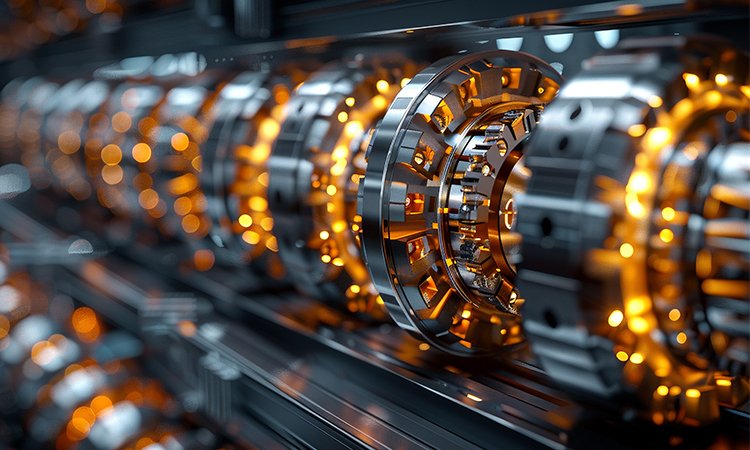
In the world of heavy industry, gigantic industrial gearboxes form the unseen backbone that keeps colossal machines in motion. Whether it is a steel rolling mill shaping red-hot slabs, a cement kiln rotating continuously for months, a ship’s propulsion system driving thousands of tonnes through water, or a mining conveyor transporting millions of tonnes of ore, at the heart of every such system lies a gearbox—and within it, bearings that carry the load, maintain alignment, and ensure smooth, reliable rotation. The performance, efficiency, and longevity of these massive gearboxes are inseparable from the quality, design, and application of their bearings.
As industries pursue higher capacities, greater efficiency, and longer operating life, bearings for gigantic industrial gearboxes have evolved into highly engineered components rather than simple rolling elements. Their role has expanded from mere load support to precision motion control, vibration management, thermal stability, and predictive maintenance enablement.
Why Bearings Are Mission-Critical in Large Gearboxes
Unlike bearings in small machines, bearings in large industrial gearboxes operate under extreme conditions. They are subjected to enormous radial and axial loads, high torque, shock loading, misalignment, vibration, and fluctuating temperatures. In wind turbines, for instance, the gearbox must endure irregular loading from gusting winds. In steel mills and mining equipment, sudden load spikes occur when raw material enters the system. In marine and cement applications, gearboxes often run continuously for years.
In such conditions, even microscopic bearing failures can lead to catastrophic gearbox breakdowns. Since these gearboxes are huge, expensive, and difficult to dismantle, bearing reliability becomes a major determinant of plant uptime and operational cost. A single bearing failure in a multi-megawatt gearbox can result in days or weeks of downtime, millions in lost production, and costly repairs.
Types of Bearings Used in Gigantic Gearboxes
Large industrial gearboxes do not rely on one bearing type alone. Instead, they use a carefully engineered combination to accommodate different loads, speeds, and alignment requirements.
Spherical roller bearings are widely used because of their ability to handle very high radial loads and tolerate shaft misalignment. This makes them ideal for heavy industrial gearboxes, especially in steel, cement, and mining plants where shaft deflection and structural deformation are unavoidable.
Tapered roller bearings are preferred where combined radial and axial loads exist, such as in helical and bevel gear stages. Their ability to precisely control shaft positioning makes them critical for maintaining gear mesh accuracy.
Cylindrical roller bearings are often used in high-speed stages of gearboxes because of their high radial load capacity and low friction. They also allow axial displacement, helping compensate for thermal expansion.
Thrust bearings, including spherical and tapered thrust types, handle axial loads generated by helical or bevel gears. In wind turbine gearboxes and marine drives, thrust bearings are vital for absorbing enormous axial forces.
Together, these bearing types form a carefully balanced system that ensures smooth torque transmission, accurate shaft positioning, and long-term stability of the gearbox.
Materials and Heat Treatment for Extreme Loads
Bearings for gigantic industrial gearboxes are manufactured from ultra-clean, high-alloy bearing steels with tightly controlled chemistry. Modern steels have extremely low levels of impurities such as oxygen and sulphur, which dramatically improves fatigue life under high loads.
Advanced heat-treatment processes, such as carburising, through-hardening, and bainitic hardening, are used to create a tough core and a hard, wear-resistant surface. This combination enables bearings to withstand both shock loads and long-term rolling contact fatigue.
In some of the most demanding applications, hybrid bearings with ceramic rolling elements are being explored to reduce friction, resist electrical pitting, and improve wear performance, especially in wind turbine and generator gearboxes.
Precision Manufacturing and Geometry Optimization
The size of bearings used in gigantic gearboxes can be staggering—often exceeding a metre in diameter. Manufacturing such large components with micrometre-level accuracy is a remarkable engineering achievement.
Advanced grinding, superfinishing, and precision measurement technologies ensure that raceways, rollers, and cages are produced to extremely tight tolerances. Optimised internal geometries, such as modified roller profiles and logarithmic raceways, help distribute
loads evenly and reduce stress concentrations.
This precision is critical because uneven load distribution leads to premature fatigue, vibration, and noise—issues that can severely compromise gearbox performance in heavy-duty applications.
Lubrication: The Lifeline of Large Gearbox Bearings
Lubrication plays a decisive role in the life of bearings in gigantic gearboxes. Because of high loads and slow speeds in some stages, these bearings often operate in mixed or boundary lubrication regimes, where metal-to-metal contact can occur if lubrication is inadequate.
Modern gearbox oils are formulated with advanced additives that provide extreme-pressure protection, oxidation resistance, and film strength. In addition, many large gearboxes are equipped with sophisticated oil circulation systems that filter, cool, and continuously monitor the lubricant.
Condition-based lubrication strategies are increasingly used, where oil quality, moisture, and particle content are continuously analysed to detect early signs of bearing or gear wear.
Digitalisation and Condition Monitoring
One of the most significant developments in bearings for gigantic industrial gearboxes is the integration of digital monitoring technologies. Sensors embedded in or around bearings measure vibration, temperature, speed, and load in real time.
These data streams are analysed using advanced algorithms and artificial intelligence to detect anomalies such as imbalance, misalignment, or early fatigue damage. Predictive maintenance systems can now forecast bearing failure weeks or even months in advance, allowing planned shutdowns instead of costly unplanned breakdowns.
This digital transformation is especially important in remote or hard-to-access installations such as wind turbines, offshore platforms, and large mining operations.
Sustainability and Energy Efficiency
As industries pursue lower carbon footprints, bearing efficiency has become a key focus. In gigantic gearboxes, even small reductions in friction translate into significant energy savings over years of continuous operation. Optimised bearing designs, low-friction materials, and advanced surface coatings help reduce power losses. Longer bearing life also means fewer replacements, less material consumption, and lower environmental impact.
In wind energy, where gearboxes are central to power generation, high-efficiency bearings directly contribute to greater electricity output and improved sustainability.
The Road Ahead
The future of bearings for gigantic industrial gearboxes lies in smarter, stronger, and more sustainable solutions. Advances in materials science, such as nano-structured steels and ceramic hybrids, will further extend fatigue life. Digital twins of gearboxes, fed by real-time bearing data, will allow engineers to simulate performance, optimise operation, and prevent failures before they occur.
For industries such as steel, cement, mining, marine, and renewable energy, these innovations mean higher reliability, lower operating costs, and greater confidence in their most critical machines.
In essence, while gigantic industrial gearboxes may appear to be about gears and shafts, it is the bearings within them that quietly shoulder the burden of the world’s heaviest work. Their evolution continues to shape the future of heavy-duty power transmission—ensuring that the largest machines on Earth keep turning with precision, endurance, and efficiency.